
What is a second piercing? Explanation of replacement timing, estimated period, and how to choose
"It's been about a month since I got my first earrings, but I wonder if it's time to get a second one?" or "I'm worried about metal allergies, so I don't want to make a mistake in choosing the material." Many people who get their first earrings come to the time of getting a second one with these concerns.
Second piercings are earrings used during an important period for ``nurturing the hole''. If you choose or handle it incorrectly, there is a risk that your piercing hole will swell or become blocked.
In this article, we will comprehensively explain the role of second earrings, the guideline for when to replace them, how to choose one without making mistakes, how to replace it, and how to troubleshoot. By the time you finish reading, you will know when to choose, what to choose, and how to choose piercings, and you should be able to start living your ideal piercing life with peace of mind.
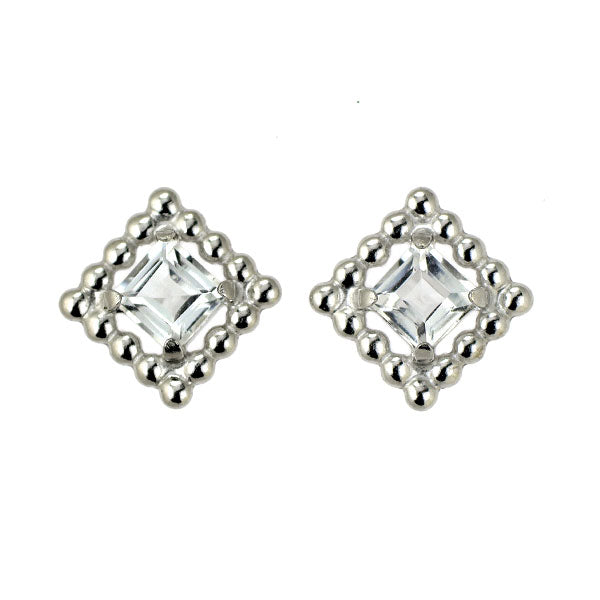
For those who don't want to make mistakes when choosing second earrings
When choosing second earrings, it is important to consider the material, size, weight, and ease of wearing. At Selby, you can search for earrings that can be used for a long time even after the second piercing, by comparing everything from simple to gorgeous.
You can choose by material and size
Compare designs
Earrings that can be used for a long time
What is a second piercing? Difference from first piercing
A second piercing is a piercing that is worn after the first piercing is removed until the piercing hole has completely stabilized. Not only does it have the meaning of "second piercing", butRole of supporting the “growth period” until hall completionThese earrings have a special position.
If the first piercing's role is to ``open the hole and create a path,'' the second piercing's role is to ``guide the hole into its completed form.'' In other words, it can be said to be the "final adjustment stage" for fashion earrings. How you handle this period will determine whether the hole will have a beautiful finish that will last a lifetime, or whether it will become an unstable hole that repeatedly suffers from problems.
Figure 1: Roadmap to completion of the piercing hole
Role of second piercing
Even after the first piercing has been worn (4 to 6 weeks to 2 months), the skin inside the piercing hole is still not fully formed. Even if the surface appears dry and calm, the inside of the hall remains delicate.
If you switch to fashion earrings all at once at this point, you are more likely to run into problems due to irritation or shape issues. The second piercing plays the following roles:
- Complete the skin (epithelialization) inside the holeContinued wearing for
- From first piercingLightweight, hypoallergenic material reduces ear strain
- Prevent holes from being blockedLeave-on operation for
- Switch to earrings with your favorite design"Bridging period"
Figure 2: Image of the internal structure of the piercing hole. Even if the surface heals, the inside is still delicate.
It will be easier to understand if you think of the first piercing as ``piercing for medical purposes'' and the second piercing as ``piercing that is somewhere between medical and fashionable.''
Difference from first piercing
The table below summarizes the differences between the two.
| Item | first piercing | second piercing |
|---|---|---|
| purpose | ``Create'' a hall | “Nurturing and stabilizing” the hall |
| Wearing period | 4-6 weeks to 2 months | 1 to 3 months (leave it on for at least 1 month) |
| Thickness (gauge) | 16G to 18G is mainstream | Same gauge as first piercing |
| shaft length | Longer in anticipation of earlobe swelling. | The length is a little generous depending on the thickness of your earlobes. |
| catch | Medical catch that won't come off easily | Standard catch (removable) |
| material | Hypoallergenic materials such as medical stainless steel and titanium | Titanium, surgical stainless steel, K18, etc. |
| design | Simple stud selection | Stud type (hoop etc. are not allowed yet) |
The point is that the second piercing also has a medical role that is an extension of the first piercing. More than cuteness, firstHall-friendly designLet's prioritize. The sense of freedom you feel after getting your first piercing can make you want to go for a flashy design, but stopping here will have a big impact on your piercing life.
When should I get my second piercing? Estimated replacement time
``How many weeks after getting my first piercing should I change it?'' This is the most important question. In conclusion,"Minimum 4 weeks, standard 6 weeks to 2 months"is a general guideline. However, this is just an "average value" and will vary depending on the individual's constitution, earlobe thickness, and facility (piercer/dermatologist).
4~6 weeks "Standard guideline" from first piercing to replacement
For earlobes
In the case of earlobes,4-6 weeks after getting your first piercingThis is a general guideline for replacement timing.
Figure 3: Estimated replacement period (for earlobes)
However, this is just a "shortest guideline". Many dermatologists and jewelry stores recommend the following for safety reasons.
- Shortest:4 to 6 weeks (if it passes without any trouble)
- standard:6 weeks to 2 months
- cautious: 2 to 3 months (for thick earlobes and sensitive skin)
If you want to plan backwards for events such as ``I want to change my earrings before a school event'' or ``I want to wear my favorite earrings for a graduation ceremony,''The golden rule is to wait at least 6 weeks without rushing.. Replacing the hole too early will significantly delay the completion of the hole in the future. For example, a plan like ``I want to open it three weeks before the graduation ceremony and put on the hoops on the day of graduation'' is reckless. at leastStart getting your first piercing 2-3 months before the event.The schedule is realistic.
In addition, people whose earlobes are thicker than average (approximately 8 mm or more) or those who have a history of metal allergy or atopic dermatitis tend to take longer for epithelialization. Be sure to give priority to "confirming the status", which will be introduced in the next section, rather than "it's okay because the period has been met".
It is better not to replace it yet.
Even if the period is met, if you have any of the following symptoms:Replacement postponedPlease.
⚠ Postponement if you have any of these symptoms:
- Painful/throbbing when touched
- Continued redness and swelling
- transparent or yellowishThere is exudate (lymph) or pus
- When you lightly move your earrings back and forth,stinging pain or bleedingThere is
- around the piercingFrequent scabs
These are ``signs that the hole is not yet completed.'' If you force yourself to change the piercing, the inflammation will worsen, and in the worst case, you may have to remove the piercing.Cases where you have to give up the holeThere is also.
If it is difficult to judge on your own, it is safe to consult the clinic or dermatologist who performed the piercing. There's no need to feel depressed because you didn't get there at the time you expected.Just a delay of 1 to 2 weeks can make a big difference in the degree of completion of the hole.So don't worry and let's go.
For those who don't want to make mistakes when choosing second earrings
When choosing second earrings, it is important to consider the material, size, weight, and ease of wearing. At Selby, you can search for earrings that can be used for a long time even after the second piercing, by comparing everything from simple to gorgeous.
You can choose by material and size
Compare designs
Earrings that can be used for a long time
How long should I leave my second piercing in? Estimated period
After changing to a second piercing, it is no good to remove it immediately or change it frequently. The next few months will be the final finishing period to "complete" the hall.
How long does it take for the piercing hole to stabilize?
Even after changing to a second piercing,minimum 1 monthis the principle. In the case of earlobes, it takes a total amount of time from piercing until the hole is completely stable.About 3 months to half a yearIt is said that it takes
0-6 weeks
First installation
Do not remove or touch
6 weeks to 3 months
Second migration
Tsukeppa/confirmed once a month
3-6 months
Hall stability period
OK for a short time
6 months ~
Hall completed
Enjoy freely
| timing | condition | Recommended action |
|---|---|---|
| 0-6 weeks after opening | Wearing first piercing | Do not remove or touch |
| 6 weeks to 3 months | Moving on to second piercing | Leave it on. Hall check once a month |
| 3-6 months | Hall stability period | Fashion earrings are OK for a short time. |
| After 6 months | Hall completed | Hoops etc. are also OK/Does not get clogged even if removed for a long time |
About a month has passed since the second piercing,Remove the earrings about once a month and check the condition of the holes.It is recommended that you do so. If there is no pain when inserting and removing the hole, and there is no exudate, it is a sign that the hole is growing properly.
On the other hand, if it gets stuck when you pull it out, exudates, or the redness returns, it's a sign that it's still a work in progress. Continue wearing the second piercing and see how it goes.
Why you should not take it off when taking a bath or sleeping
I tend to think, "Isn't it more hygienic to take it off when you sleep?", but during the second piercing period,Keep it on while taking a bath or sleepingis the correct answer. There are three reasons.
1
It will close soon
Just left it out for a few hours
the hole begins to shrink
the hole begins to shrink
2
Friction is a stimulus
Frequent insertion and removal
delay epithelialization
delay epithelialization
3
infection risk
If your hands are not clean
Bacteria can easily enter
Bacteria can easily enter
💡 One point
Just wash it gently with soap bubbles in the bath and rinse it off in the shower. If shampoo or conditioner remains, it can be irritating, so wash it at the end.Thoroughly rinse the area around the hallPlease be aware of this. If you are concerned about getting caught when sleeping,Flat stud type with short postsIt is comfortable to choose.
Just wash it gently with soap bubbles in the bath and rinse it off in the shower. If shampoo or conditioner remains, it can be irritating, so wash it at the end.Thoroughly rinse the area around the hallPlease be aware of this. If you are concerned about getting caught when sleeping,Flat stud type with short postsIt is comfortable to choose.
``What should I do about swimming pools and the ocean?'' is a question that is often asked, but it is best to avoid water areas with lots of bacteria during the second piercing period. If you must get in the water, take measures such as protecting it with tape, cutting it up quickly, and immediately rinsing it off with a shower after getting in the water.
How to choose second earrings | Check the material, thickness, length, and shape
From here on, it's finally time to practice choosing your second piercing. There are four points to check: ``gauge,'' ``post length,'' ``shape,'' and ``material.''
Figure 4: Names of each part of earrings and points to consider when choosing
We recommend that the gauge (thickness) be the same as your first piercing.
The gauge (thickness of the shaft) of the second piercing isChoose the same gauge as your first piercingis the basics.
| gauge | diameter | Main uses |
|---|---|---|
| 16G | 1.2mm | Maintaining a first/stable hall for medical institutions |
| 18G | 1.0mm | Piercer's first/general fashion earrings |
| 20G | 0.8mm | General fashion earrings |
Figure 5: Thickness comparison by gauge
For those whose first piercing was 18G, the second one is also available.18G or 18G equivalent fashion earringsLet's choose. If you insert earrings that are too thin (20G) into a hole that has not yet been completed, the hole may shrink.From now on, I will only be able to fit that thickness.Possibly.
On the other hand, even if you open the hole at 16G and narrow it down to 18G, it is safe to first maintain the hole at 16G and make the hole completely stable before making the transition. I understand the feeling that "thick earrings stand out, so I want them to be thinner."Change the gauge after the hole is completely stable (at least after six months)Let's do it.
Choose a post that is long enough.
The length of the post (shaft) isEarlobe thickness + 2-3mm extra spaceis ideal. The approximate length is as follows.
- Standard earlobe thickness: around 6mm → post 8~10mm
- Thick earlobes: 8mm or more → Post 10-12mm
Figure 6: Leave a margin of “ear thickness + 2 to 3 mm” for the post length.
If it is too snug, the catch will dig into your earlobe,Poor blood circulation or burying (piercing buried in the skin)increases the risk of On the other hand, if it is too long, it will be easier to catch it,There is just enough room to fit one finger in.Please use this as a guide.
If you don't know the thickness of your earlobe, it's a good idea to check the length of the post before removing your first earring, and subtract a few millimeters of swelling from that length as a reference.
Choose a stud type that won't get caught easily
During the second piercing period,Simple stud (straight rod) typeis the golden rule.
- catch: Round catch or flat catch that does not get tangled in hair or clothes.
- motif size:Small size of about 3-5mm
- shape: Round balls, single stones, small discs, etc. are standard.
Swinging designs and hook shapes can cause problems with getting caught.First of all, prioritize ``not getting in the way''Let's choose. You may feel that the hall is too simple and boring, but once the hall is completed, you will be able to choose any design you want. Let's take this as a time to enjoy "sober aesthetics."
For those who don't want to make mistakes when choosing second earrings
When choosing second earrings, it is important to consider the material, size, weight, and ease of wearing. At Selby, you can search for earrings that can be used for a long time even after the second piercing, by comparing everything from simple to gorgeous.
You can choose by material and size
Compare designs
Earrings that can be used for a long time
Recommended materials for second piercings
For those who are concerned about metal allergies, choosing the material is the most important point. Allergies are difficult to cure once they occur, soChoosing materials that are unlikely to cause allergies is the first step to prevention.It is.
Figure 7: Allergy risk and price range map of main materials
RANK S: Most secure
titanium
★★★★★
A highly biocompatible metal that is also used for medical purposes. The risk of allergies is extremely low, and it is lightweight and puts less strain on your ears.
RANK A: Standard material
surgical stainless steel
★★★★☆
316L type also used for medical equipment. A standard material for second earrings, with a good balance of price and safety.
RANK A: Jewelry grade
Platinum (Pt900~)
★★★★★
High purity and less likely to cause allergies. It does not discolor and can be used for a long time as a lifetime jewelry.
RANK A: Jewelry grade
K18 gold or higher
★★★★☆
If it's 18k gold or higher, it's relatively safe. K10 and K14 have an allergy risk due to the premium price.
titanium
The most non-allergenic materialTitanium is known as titanium. In particular, "pure titanium" and "medical titanium (Ti6Al4V ELI, etc.)" are highly biocompatible metals that are used in artificial joints and implants.
- Extremely low metal allergy risk
- Light and less burden on the ears
- Not easy to rust and discolor
- Price is a little high
- There are few variations in design
If you absolutely do not want to develop allergies or have sensitive skin and have had problems in the past, then choose titanium without hesitation. In addition, even if it is written as titanium, if it is "titanium coated (plated)", there is a possibility of an allergic reaction to the base metal, so please be sure to check when purchasing."Pure titanium" "All parts titanium"Please check the description.
surgical stainless steel
Also used in medical equipment"Surgical stainless steel (316L, etc.)"is a type of stainless steel that is particularly unlikely to cause metal allergies. It has a good balance of cost performance and safety, and is a standard material for second earrings.
- Less likely to cause allergies after titanium
- Scratch resistant and durable
- Resistant to rust and discoloration
- Cheaper than titanium
- Contains trace amounts of nickel,Caution if you have a severe nickel allergy
If you are concerned about a nickel allergy, please check to see if it says ``Nickel Free'' when purchasing. This is different from the "stainless steel" used for general fashion earrings, so be sure to check the descriptions such as "surgical stainless steel" and "316L."
platinum gold
Platinum and gold are popular jewelry materials that can be used for a long time.If the purity is high, it can be used as a second piercing.。
- Platinum (Pt900/Pt950): High purity and less likely to cause allergies. Does not change color
- Gold (K18 or above): Relatively safe if it is 18k gold or higher. K10 and K14 have an allergy risk due to the premium price.
- Avoid plated products as the risk of allergies increases if the plating peels off.
Selby's jewelry earrings include K18, platinum, and diamonds.High quality products made from genuine materialsis the center. Since it is a used piece, you can choose the real thing at an affordable price, making it perfect for those who want to use jewelry that will last a lifetime, starting with their second piercing. It is also recommended as a "reward earring" after the hole has stabilized.
Designs to avoid with second piercings
While you may want to enjoy fashion, there are some designs that you should avoid choosing during the second piercing period.
Figure 8: ◎/ during the second piercing period✕design
hoop earrings
Hoop earrings are cute and popular,No second piercing period (minimum 3 months)。
- Pulling or twisting the hole when attaching or detaching may damage the inside.
- Easy to get caught in the pillow when turning over
- Friction inside the hole is likely to occur
If you want to move to hoops,At least 3 months, preferably 6 months after piercingis safe. I am often asked, "Is it okay to use a small hoop?" However, regardless of the size, the structure itself that moves in a circle within the hole is a burden.Avoid the second piercing period even if it is small.It is wise.
Large and swinging design
Chandelier type and long dangling earrings are also designs that should be avoided as they have a high risk of getting caught.
- The hole stretches downward due to the weight.
- Easy to get tangled in hair or clothes
- Vibration continues to cause minute stimulation inside the hall
I understand the feeling of wanting to wear your favorite design as soon as possible.The more you get through the stud period without rushing, the richer your piercing life will be.It will be. As a guideline for weight,Studs weighing less than 1g per earIt is safe to choose.
Procedures and precautions for changing to a second piercing
The key to preventing problems is to replace them in the correct procedure. Here we will explain in detail the process from pre-check to installation.
Check points to check before replacing
On the day of replacement, please check the condition using the checklist below.
- Even if you move your first piercing lightly back and forth,no pain
- around the hallNo redness, swelling, or heat sensation
- No exudate or pus
- Scab andNo abnormal secretions
- From the first piercingMore than 4 weeks have passed
- Allows time for replacement(Don't do it in a hurry)
If even one item doesn't apply to you, postpone replacing it for another week or two. Also, replacementClean state after bathing and time when blood circulation is goodis recommended. It is safer to do this during the day on a holiday when you can check the hole condition the next day instead of late at night.
Steps to change to second piercing
Figure 9: 6 steps to replace with second piercing
- wash your hands thoroughly with soap: Working with clean hands is the first step to preventing infection.
- Disinfect the piercing with alcohol: Gently wipe the second piercing with disinfectant cotton.
- Warm your earlobes with a steamed towel: Promote blood circulation and make it easier to move around the hole
- slowly remove first piercing: Remove the catch and pull the shaft straight back.
- Insert the second piercing straight: Look in the mirror and follow the angle of the hole.
- Fasten the catch in a position where it does not dig into your earlobe.: Lock with some margin
NG actions you should not do
- Pull/push forcefully around the piercing hole
- Just because I can't get inforce it in
- Leaving it unplugged for a long time (the hole will shrink)
- with othersshare earrings
If it takes more than 5 minutes to insert or there is pain or bleeding, please return to the original piercing and try again in 1 to 2 weeks. Abandon the obsession of ``I'll definitely change it today'',Flexibility to follow the voice of the hallThe key to completing the hole in the shortest possible time is to have a good hold on it.
What to do if a problem occurs during the second piercing
No matter how carefully you take care of your dog, problems may occur due to changes in your physical condition or living environment. Don't panic and deal with it properly.
If swelling or pain occurs
If the discomfort is only mild, try the self-care steps below to see how it goes.
- earringsDo not touch or turn(In the past, it was called "turning," but it is no longer recommended.)
- 1-2 times a dayWash gently with soap and shower
- Lightly cool the affected area with a cold towel
- Earphone/mask stringavoid pressure such as
If the pain does not improve after 2 to 3 days or the pain becomes severe, please consult a dermatologist. There are many cases where things get worse if you leave things as they are, thinking that things are fine.If any discomfort persists, see your doctor as soon as possible.is actually a shortcut.
If bleeding or pus occurs
A small amount of bleeding or clear exudate is not a problem, butPain accompanied by yellow-green pus, strong swelling, and feverIf there is, there is a possibility of infection.
🚨 Go to a dermatologist immediately
- The earrings areDon't remove it based on your own judgment(There is a risk that pus may become trapped inside)
- promptlyVisit a dermatologist
- Do not use commercially available disinfectants unnecessarily (follow your doctor's instructions)
If the infection is left untreated, it can develop into swollen lymph nodes and cellulitis, so if your symptoms are severe, don't hesitate to seek medical attention.
If the piercing hole seems to be blocked
If it hurts when you insert or remove it, or if you find it difficult to insert it, it's a sign that the hole is narrow.
- Don't force it
- Switch to thinner earrings (simple titanium earrings)
- If it still doesn't go in,Consultation for re-piercing at a piercing studio or dermatologist
If it becomes completely blocked, you will need to re-pierce it. Avoid the habit of taking it off for long periods of time just because it's a hassle. Especially during the second piercing period,Wear for 24 hoursPlease think about it based on.
Finally
Second earrings are special earrings that are used during the period of ``carefully nurturing the hole'' before ``enjoying fashion''.4-6 week replacement period, same gauge as First, hypoallergenic material, continuous operation--If you follow these four points, you can get a stable and beautiful piercing hole.
✅ 4 golden rules for second piercing
- When is the replacement time? 4-6 weeks onwards, but status confirmation is the top priority
- The gauge is same as first(It will be thinner after half a year)
- The material is Titanium, surgical stainless steel, K18 or higherFrom
- at least 1 month Leave it on, wear it while taking a bath or sleeping
If you grow your hole step by step without rushing, you will be rewarded with the ability to fully enjoy your favorite hoops and jewelry earrings in six months or a year. On the other hand, if you cut corners here, you will lose the holes you have worked hard to open, and you will be in trouble for a long time.Careful care at this time is the foundation for a piercing life that will last for years to come.Don't forget to become
Selby is the only company in the Komehei Group that specializes in jewelry.From used high brand earrings to new earrings made from imported loose pieces.We handle a wide range of products. All of our products have been carefully checked for quality by professional appraisers, so you can rest assured that you can choose them as a step up after your second piercing, or as a piece that you can use for a long time.
For those who don't want to make mistakes when choosing second earrings
When choosing second earrings, it is important to consider the material, size, weight, and ease of wearing. At Selby, you can search for earrings that can be used for a long time even after the second piercing, by comparing everything from simple to gorgeous.
You can choose by material and size
Compare designs
Earrings that can be used for a long time