
Diamond color grade table|Explanation of color characteristics and how to choose
Among the ``4Cs (carat, cut, color, and clarity)'' known as diamond evaluation standards, color has a strong influence on both the impression to the naked eye and the market price.
Diamonds that are close to colorless and transparent are particularly rare and have a stable reputation in the international market.
In this article, we will explain how diamond colors are determined and how to choose them based on GIA (Gemological Institute of America) standards from the perspective of a jewelry store.
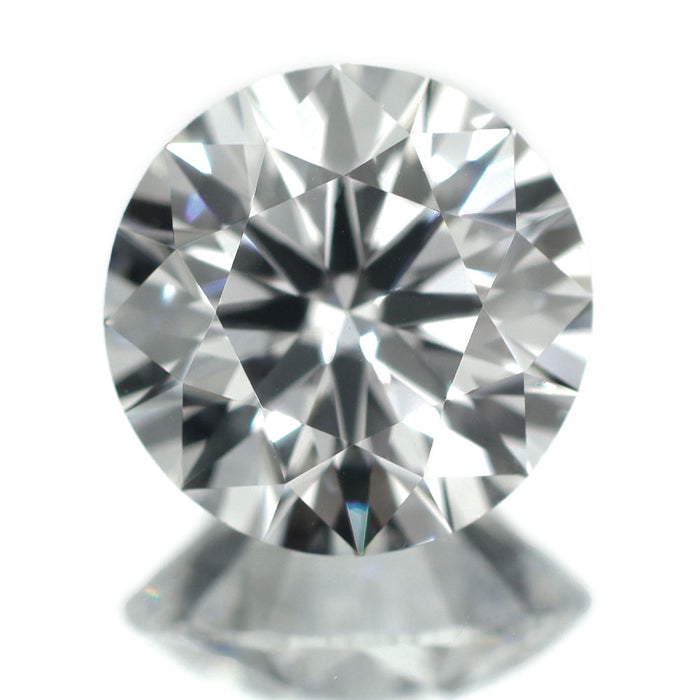
If you are particular about the color of your diamond, compare it with a certificate of authenticity.
When it comes to diamonds, it is important to balance not only the color but also the carat, clarity, and cut. At Selby, you can check the information on the certificate and compare quality and price to find the item that suits you.
Compare by color
Check the 4Cs
With certificate of authenticity
What is the color of a diamond? Color characteristics and values
Generally speaking, ``the closer to colorless and transparent a diamond is, the higher its value'' is because the diamond crystal has fewer elements (impurities, structural defects, etc.) that cause color during its formation process, the rarer it is.
The difference in color is not only related to the appearance of whiteness, but also to the impression and asset quality of the piece as a piece of jewelry.
Diamond color grade table established by GIA

The GIA (Gemological Institute of America) rates diamond color on a 23-point scale from D to Z.
The evaluation is compared with the Master Stone and is carried out in a professional environment.

D/E/F: Colorless
D, E, and F colors are the highest ``colorless'' zones among GIA's color grades.
It has an extremely high level of transparency, with almost no perceptible color under either artificial or natural light.
It is highly rare due to its extremely high purity crystal structure, and has excellent asset value and stability in evaluation in the international market.
Especially when set in platinum or white gold, the diamond's natural clear brilliance is brought out to the fullest.
G/H/I/J: Near Colorless
G, H, I, and J colors are classified as "nearly colorless," and in most cases they appear colorless from a distance in everyday use.
Another feature is that if you choose the appropriate cut and setting, there will be no big difference in appearance from the D color.
Due to its excellent balance between price and appearance, it is a particularly popular color zone for engagement rings and fine jewelry.
K/L/M: Slight yellowish (Faint)
When it comes to K, L, and M colors, a very slight yellowish tinge can be detected when observed by an expert.
However, when combined with yellow gold or pink gold, the color harmonizes and it is often the case that it becomes attractive as a highly designed piece of jewelry.
This zone is often used for antique jewelry and vintage designs, and is chosen by those who value atmosphere and individuality.
N/O/P/Q/R: Very light yellow
N/O/P/Q/R colors are grades where a yellowish tinge is clearly noticeable to the naked eye.
Although its reputation as a colorless diamond is lower, the price can be reduced accordingly, so in some cases it is chosen with an emphasis on cost performance.
By limiting the settings and uses, this zone becomes a practical option.
S/T/U/V/W/X/Y/Z: Light yellow
S to Z colors are grades with a distinct yellow tinge and are classified as the lowest zone in GIA's colorless evaluation.
Although its value as a general "colorless diamond" is low, it may be an option if price conditions and design are important.
It is important to clarify your purpose and budget before considering.
Below is a diamond color chart shared by GIA.
Why color grades start with “D”
Previously, A, B, and C notations existed in the market, but the standards differed depending on the appraisal agency and vendor, causing confusion.
GIA has completely separated from the existing notation and deliberately adopted a system that starts with "D" to indicate an internationally unified standard.
Why diamonds change color
The color of a diamond is mainly caused by the following factors:
- Impurity elements: nitrogen (yellow color), boron (blue color), etc.
- Distortion of crystal structure: Cases that cause color development such as pinkish color
- Effect of natural radiation: When it causes green coloring
- Artificial treatment: Cases in which color tone is improved or coloring is added.
Near colorless diamonds are crystals that are extremely free from these effects, and their rarity is reflected in their price.
fluorescent diamond
The property of glowing blue-white under ultraviolet light is called fluorescence.
It is important to note that evaluation of fluorescence is interrelated with color, and it is difficult to judge good or bad by itself.
- D to F colors: Strong fluorescence may impair transparency.
- G to J color: suppresses yellowness and may actually look white in some cases
It is best to make a judgment based not only on the notation on the certificate, but also on how it looks in real life (including light source and setting).
Source:Fact-checking about diamond fluorescence: dispelling 11 superstitions

How to choose a diamond so you won't regret it
Color is not "highest grade = optimal solution".
It is important to consider the purpose, budget, and setting, and then make a selection that will give you a high level of satisfaction.
- Engagement ring/Daily use: G~H color × Excellent cut (emphasis on balance)
- Emphasis on asset quality and rarity: D to F colors (weak to no fluorescence is safe)
- Emphasis on design and price: Adjust the impression with I to J colors + base metal color (emphasis on compatibility with the frame)
In particular, rings are worn closely, so how they look as a finished piece of jewelry is more important than the individual value.
If you are particular about the color of your diamond, compare it with a certificate of authenticity.
When it comes to diamonds, it is important to balance not only the color but also the carat, clarity, and cut. At Selby, you can check the information on the certificate and compare quality and price to find the item that suits you.
Compare by color
Check the 4Cs
With certificate of authenticity
World-famous colored diamonds
Apart from the colorless rating (D-Z), fancy colored diamonds are also popular internationally, as the color itself determines the value. Here are some representative examples.
hope diamond
The Hope Diamond is a world-famous blue diamond weighing approximately 45.52 carats.
Its deep, mysterious blue color is the result of trace amounts of boron contained within the crystal, making it one of the rarest fancy colored diamonds.
Currently housed in the Smithsonian National Museum of Natural History, it is widely known as a symbol of colored diamonds, both for its scientific value and historical background.
dresden green

Dresden Green is renowned as the pinnacle of natural green diamonds.
It has a unique green color that is said to be caused by the effects of natural radiation rather than by artificial processing, and is highly praised for its natural coloring.
It is a rare diamond that has been loved by royalty and aristocrats throughout its long history, and in addition to its beauty as a gemstone, it also has cultural and historical value.
pink star
Source:Large diamond "Pink Star" sold for record 7.9 billion yen in Hong Kong - CNN.co.jp

The Pink Star is a fancy pink diamond that weighs approximately 59.60 carats and is known as a symbol in the auction market.
The pink color, which is caused by distortion of the crystal structure, is formed under very harsh conditions and is sometimes even rarer than colorless diamonds.
The Pink Star is an indispensable example of the rarity and beauty of colored diamonds, and is essential when discussing the value of colored diamonds.
tiffany yellow diamond

Tiffany Yellow Diamond is a fancy yellow diamond with an overwhelming presence of approximately 128.54 carats.
The rich yellow color comes from the crystal structure containing nitrogen, and it is characterized by a vivid and strong color tone.
It has been positioned as Tiffany's brand icon for many years, and can be said to be a representative stone that symbolizes that fancy colored diamonds have value in their "color itself."
Finally
A diamond's color is not just an indicator of its whiteness.
This is an important element in deciphering rarity, beauty, and asset value.
By considering the cut, clarity, setting, and occasion in which it will be used, you will be able to confidently choose a diamond that is truly beautiful for you.
At Selby, we don't rely solely on the numbers on the certificate, we comprehensively check the actual appearance (color, brilliance, fluorescence), and carefully select diamonds with an emphasis on their beauty when completed.
- Comes with certificate of authenticity (GIA, etc.)
- Comprehensive evaluation including color/brilliance/fluorescence
- Selection considering how it will look after setting
If you are particular about the color of your diamond, compare it with a certificate of authenticity.
When it comes to diamonds, it is important to balance not only the color but also the carat, clarity, and cut. At Selby, you can check the information on the certificate and compare quality and price to find the item that suits you.
Compare by color
Check the 4Cs
With certificate of authenticity