
How to tell the difference between ruby, garnet, and spinel | A thorough comparison of the differences between red gemstones
How to tell the difference between ruby, garnet, and spinel | A thorough comparison of the differences between red gemstones
SELBY / Company information
Komehei Group's only jewelry specialty company
We carry out on-site inspections by production area and direct imports in-house. We carefully select genuine rubies with a discerning eye.
SUPERVISOR / Supervision
Takazo Saito
Selby EC/SNS/Ruth/Production Department Manager
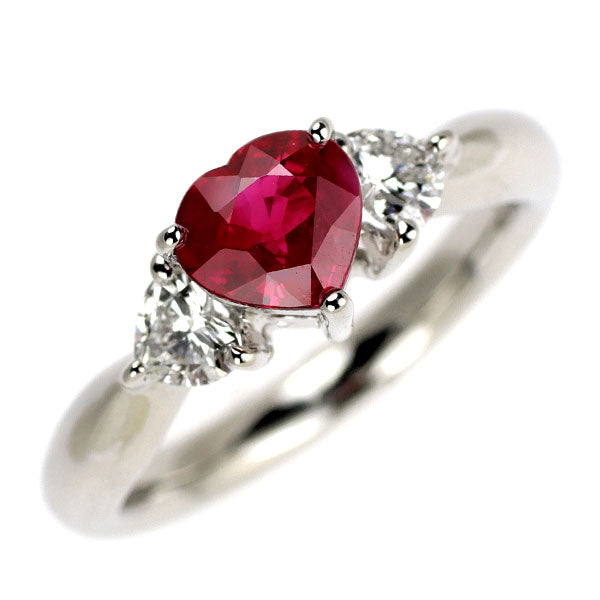
Compare ruby with its attractive bright red color at Selby
The impression of a ruby varies greatly depending on the depth and vibrancy of its red color, size, and design. At Selby, you can compare various ruby jewelry and find the one that suits you.
Compare by color
Choose by design
Status check OK
Types and differences of red gemstones [Conclusion]
When you think of red gemstones, the first thing that comes to mind is ruby, but actuallyThere are multiple other "jewels that appear red"I will. The typical one isRuby, garnet, spinel, red tourmaline, red beryl5 types. Each mineral is completely different, with clear differences in hardness, refractive index, fluorescence, and price.
QUICK GUIDE
The biggest distinguishing point is"Hardness", "fluorescence reaction" and "refractive index"Three things. Although scientific identification at a specialized institution is reliable, there are several characteristics that can be used to tell the difference with the naked eye.
ruby
hardness 9
garnet
Hardness 7-7.5
spinel
hardness 8
red tourmaline
Hardness 7-7.5
red beryl
Hardness 7.5-8
5 representative types of red gemstones
The five types that tend to be grouped together as "red gemstones" are completely different mineralogically. Let's organize the basic information.
| Gem name | mineral | Main cause of color development | Main production areas |
|---|---|---|---|
| ruby | Corundum (Al₂O₃) | Chromium (Cr) | Myanmar/Mozambique |
| garnet | garnet family minerals | Iron (Fe)/Manganese (Mn) | all over the world |
| spinel | Spinel (MgAl₂O₄) | Chromium (Cr) | Myanmar/Tajikistan |
| red tourmaline (rubellite) |
tourmaline minerals | Manganese (Mn) | Brazil/Nigeria |
| red beryl (Bix Bite) |
Beryl (Be₃Al₂Si₆O₁₈) | Manganese (Mn) | Utah, USA only |
How to tell the difference between ruby and garnet
inside the red gemGarnet is the most familiar and is often confused with ruby.. Especially with rose cuts and cabochons, it is difficult for even jewelers to identify them with the naked eye.
| Item | ruby | garnet |
|---|---|---|
| mineral | corundum | garnet family |
| hardness | 9 | 7〜7.5 |
| refractive index | 1.76〜1.78 | 1.74〜1.94 |
| fluorescence | strong red fluorescence | Almost none |
| pleochroism | Yes | None (equiaxed crystal system) |
| 1ct price guide | 200,000 to several million yen+ | 10,000 to 100,000 yen |
Difference in hardness
The hardness of ruby9Its hardness is second only to diamond. On the other hand, Garnet7〜7.5It is about as hard as crystal. Measuring the hardness of the actual product is not recommended for the general public due to the risk of damage.How to get scratches on the stone surface of a ring that has been used for many yearsGarnet tends to be more easily damaged.
Difference in refractive index
The refractive index isThe strength of the gem's brillianceAn indicator directly connected to. The value varies greatly depending on the type, with rubies ranging from 1.76 to 1.78 and garnets ranging from 1.74 to 1.94.Rhodolite garnet (red-purple) has a refractive index extremely close to that of ruby.This is a factor that increases the difficulty of visual identification. Refractometer measurement at an identification organization is a reliable method of identification.
Differences in fluorescence reaction
The most decisive difference is"Fluorescence reaction under ultraviolet light". Ruby is a result of chromiumstrong red fluorescenceHowever, since garnet contains a lot of iron,Almost no fluorescence. The moment you shine a 365nm black light on it, the ruby glows like it's burning from within, while the garnet becomes silent - the difference is clear.
price difference
While ruby costs 200,000 to several million yen per ct,Garnet (standard item) is 10,000 to 100,000 yen. The price difference is dozens of times. Because there is such a big difference, when purchasingDetermining ``Is this a ruby or a garnet?'' is also economically important.. We strongly recommend purchasing with a certificate of authenticity.
How to tell the difference between ruby and spinel
inside the red gemSpinel is the most difficult to distinguish from ruby.. They are like twins in the jewelry world, and have been confused for a long time historically.
Reasons for historical confusion
The reason why spinel was confused with ruby is clear.Chromium is the coloring factor for both.This is because the color, fluorescence, and hardness (9 and 8) are also similar. Until the end of the 19th century, many European royal treasures contained red stones called rubies, but later analysis revealed that they were actually spinels.
Black Prince's Ruby (Actually Spinel)
📜 HISTORY FILE
"The Black Prince's Ruby" incident
Shining in the center of the British royal family's coronation coronet170 carat red megalith "Black Prince's Ruby". For over 600 years since the 14th century, the ruby has been a symbol of the British monarch. butIdentification in 1851 revealed that it was actually a red spinel.. In the biggest twist in jewelry history, the ruby that was inherited from generation to generation by Edward the Black Prince, Henry V, and Elizabeth I was not actually a ruby.
Points to distinguish
| Item | ruby | spinel |
|---|---|---|
| mineral | corundum | spinel |
| hardness | 9 | 8 |
| refractive index | 1.76〜1.78 | 1.71〜1.74 |
| crystal system | hexagonal system | equiaxed crystal system |
| pleochroism | Yes | None |
| fluorescence | strong red fluorescence | Medium to strong red fluorescence |
| 1ct price guide | 200,000 to several million yen+ | 100,000 to 1 million yen+ |
The most reliable point of determination is"pleochroism". Ruby has a hexagonal crystal system and is pleochroic, but spinel has an equiaxed crystal system and is not pleochroic. When an expert looks at it with a dichrooscope, it can be easily identified by the presence or absence of a color change when the crystal orientation is changed.
Compare ruby with its attractive bright red color at Selby
The impression of a ruby varies greatly depending on the depth and vibrancy of its red color, size, and design. At Selby, you can compare various ruby jewelry and find the one that suits you.
Compare by color
Choose by design
Status check OK
Difference between ruby and red tourmaline (rubellite)
red tourmaline is"Rubellite"Also known as a popular rare stone. Although it has a different charm from ruby, it is sometimes confused with ruby.
| Item | ruby | red tourmaline |
|---|---|---|
| mineral | corundum | Tourmaline family (Elbaite family) |
| hardness | 9 | 7〜7.5 |
| refractive index | 1.76〜1.78 | 1.61〜1.65 |
| pleochroism | weak to medium | Strong (biggest feature) |
| fluorescence | strong red fluorescence | Almost none |
| Color | Pure red to purple red | pink red ~ purple red |
| 1ct price guide | 200,000 to several million yen+ | 50,000 to 500,000 yen |
The biggest feature of red tourmaline is"Strong pleochroism". When viewed in the direction of the crystal axis, you can enjoy different shades of deep red and light red.Easily distinguishable from ruby under black light as there is almost no fluorescence reactionIt is. Since the refractive index also differs greatly, it can be clearly distinguished even by refractometer measurement.
Difference between ruby and red beryl (bixbite)
Red Beryl (Red Beryl / Bixbite)It is a red species of the beryl family, same as emerald, and is one of the rarest gemstones in the world.Only around the Wah Emerald Mine in Utah, USAThis is a super rare stone produced in.
| Item | ruby | red beryl |
|---|---|---|
| mineral | corundum | beryl |
| hardness | 9 | 7.5〜8 |
| refractive index | 1.76〜1.78 | 1.56〜1.57 |
| Production area | all over the world | Utah, USA only |
| crystal size | Large grains possible | Most are less than 0.3ct |
| 1ct price guide | 200,000 to several million yen+ | 500,000 to 5 million yen+ |
Red beryl is ratherSomething rarer than a ruby. It is said that dozens of pieces of faceted cut loose jewelry are produced around the world each year, and it has a bright red color with an orange tinge unique to beryl.Very different refractive index (1.56 vs 1.77)Therefore, differentiation is relatively easy.
Red jewel list comparison table
This is the definitive comparison table that summarizes the characteristics of all 5 types.
| Item | ruby | garnet | spinel | R.Tourmaline | R. Beryl |
|---|---|---|---|---|---|
| hardness | 9 | 7〜7.5 | 8 | 7〜7.5 | 7.5〜8 |
| refractive index | 1.76〜1.78 | 1.74〜1.94 | 1.71〜1.74 | 1.61〜1.65 | 1.56〜1.57 |
| specific gravity | 4.00 | 3.5〜4.3 | 3.6 | 3.0〜3.3 | 2.7〜2.9 |
| pleochroism | weak to medium | None | None | strong | Medium to strong |
| UV fluorescence | Strong | None | Medium to strong | Almost none | Almost none |
| crystal system | Six directions | equiaxed | equiaxed | Three sides | Six directions |
| Rarity | ★★★★ | ★★ | ★★★★ | ★★★ | ★★★★★ |
Difficult to distinguish even for professionals
There are also cases where it is difficult to distinguish with the naked eye or with simple tools. The following situations are typical.
- Cabochon-cut (dome-shaped) ruby vs spinel: Difficult to confirm pleochroism due to lack of facets
- red stones in old antique jewelry:Refractive index measurement is not possible because the stone cannot be removed.
- Rhodolite garnet (reddish-purple):Refractive index is close to ruby
- high quality spinel:An individual exhibiting a bright red color equivalent to ruby.
- Synthetic stone/induced corundum: Almost impossible to distinguish with the naked eye
In these cases,Reliable identification organizations (GIA, SSEF, GRS, Central Gem Research Institute, etc.)Spectroscopic analysis and magnification inspection are reliable methods of determination. All red gemstones sold by Selby come with a certificate of authenticity.
👤 SUPERVISOR'S STORY
“Lethal Weapon” talks about the secret of discrimination
Supervised by Selby, Mr. Saito has experience in purchasing directly from production areas, and is able to purchase products directly from local dealers."Lethal Weapon"A connoisseur called a connoisseur.
Distinguishing between ruby and spinelYears of experience is decisivesays Saito. The crystal shape at the raw stone stage (corundum is barrel-shaped, spinel is octahedral), the internal light scattering pattern when pinpointed with light, the color and intensity of fluorescence under ultraviolet light - all of these are considered in making a judgment. Even so, the final confirmation must be made by an identification agency - that is the pride of a professional who handles genuine items.
🔥 LETHAL WEAPON
Distinguishing between ruby and spinelYears of experience is decisivesays Saito. The crystal shape at the raw stone stage (corundum is barrel-shaped, spinel is octahedral), the internal light scattering pattern when pinpointed with light, the color and intensity of fluorescence under ultraviolet light - all of these are considered in making a judgment. Even so, the final confirmation must be made by an identification agency - that is the pride of a professional who handles genuine items.
Compare ruby with its attractive bright red color at Selby
The impression of a ruby varies greatly depending on the depth and vibrancy of its red color, size, and design. At Selby, you can compare various ruby jewelry and find the one that suits you.
Compare by color
Choose by design
Status check OK
Frequently asked questions (FAQ)
What's the easiest way to tell ruby and garnet apart?
Apply ultraviolet light (365nm)If it glows red, it's a ruby, if it doesn't glow, it's a garnet.There is a high possibility that This is the simplest discrimination method that can be used to identify almost all individuals. A definitive determination requires analysis by a laboratory.
Is spinel less valuable than ruby?
It used to be treated as a substitute for ruby, butIn recent years, it has been reevaluated as having a value equal to or higher than rubies.It has been. In particular, non-heated, pigeon blood-grade spinel from Myanmar can be traded at prices higher than rubies. Spinel's unique charm is rapidly increasing its popularity.
How do you identify red tourmaline?
strong pleochroismis a decisive feature. It has dichroism, meaning that different red colors appear depending on the direction of the crystal axis. Its refractive index is 1.61 to 1.65, which is much lower than ruby (around 1.77), so it can be easily identified with a refractometer.
Which is rarer, red beryl or ruby?
Just look at the outputRed beryl is much rarer than ruby.It is. The distribution of facet cut products worldwide is on a scale of several dozen pieces each year. However, ruby has much higher market recognition, and the price range is close to that of ruby.
How can I tell if an antique red stone is a ruby?
If the stone can be removed from the base metal, it can be identified by refractive index measurement, but if it cannot be removed,Using a magnifying glass, you can see internal inclusions, ultraviolet fluorescence, and the year the jewelry was made.It can be estimated to some extent from To be sure, there is a way to request a non-destructive analysis (fluorescent X-ray, etc.) at an identification organization.
Can you tell the difference between synthetic ruby and natural ruby?
It is difficult to distinguish with the naked eye. Synthetic ruby (Bernoulli method, flux method, etc.)Inclusion patterns such as bubbles and curved growth linesIt can be identified, but a magnified examination by a specialist is required. This can be determined reliably using the identification report from the identification organization.
Summary
Key points of this article
- 5 types of "red gems": ruby, garnet, spinel, red tourmaline, red beryl
- Ruby and Garnet: Clear differences in hardness, fluorescence, and price. Up to 10x price difference
- Ruby and Spinel: Historically confused. Identification by presence or absence of pleochroism
- "The Black Prince's Ruby" is a famous case that was discovered to be spinel in 1851.
- Red tourmaline: distinguished by strong pleochroism, low refractive index, and no fluorescence
- Red Beryl: Super rare. Produced only in Utah, USA
- For reliable identification, analysis by an identification organization is essential.
- Selby provides safe rubies that come with a certificate of authenticity and are imported directly from the production area.
Even though it is called a "red gemstone", there are five types that are completely different mineralogically.Knowledge to identify real rubies not only by appearance but also by scientific characteristics such as hardness, refractive index, and fluorescence.is the first step to purchasing expensive red jewelry with confidence. As the only company specializing in jewelry in the Komehei Group, Selby sincerely provides all red jewelry with certificates of authenticity.
Compare ruby with its attractive bright red color at Selby
The impression of a ruby varies greatly depending on the depth and vibrancy of its red color, size, and design. At Selby, you can compare various ruby jewelry and find the one that suits you.
Compare by color
Choose by design
Status check OK
SUPERVISED BY
Takazo Saito
Selby EC/SNS/Ruth/Production Department Manager. He is an expert in identifying and purchasing red gemstones in general, and is known in the industry as ``Lethal Weapon.''