
Thorough comparison of Paraiba tourmaline production areas ~Differences between Brazilian and African production~
Even if it is simply called "Paraiba tourmaline", it depends on the production area.Color, ingredients, price, rarityis dramatically different. It is not uncommon for the price to differ by more than 5 times between Brazil and Africa for the same 1 ct loose piece.
In this guide, we introduce Komehei Group's only jewelry specialty company.selbywill compare and explain the main production areas of Paraiba tourmaline from various angles, based on our past direct transactions and import records.
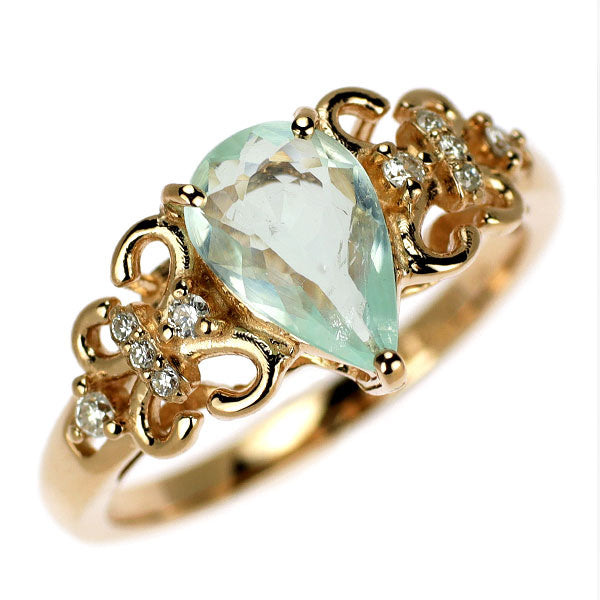
Compare the unique Paraiba tourmalines at Selby
Paraiba tourmaline varies in color, rarity, size, and price depending on the region of production, such as Brazil and Mozambique. You can search for your favorite item while checking product information and identification information.
Compare by color
Check production area information
Status check OK
Figure 1: Main producing areas of Paraiba tourmaline in the world
① San Jose da Batalha mine, Paraiba state (origin)
Origin of BrazilSan Jose da Batalha Mine
Location: Paraiba state, northeastern Brazil / Year of discovery: 1987 / Status: Almost exhausted
The legendary place that produced the highest quality neon blue
Discovered in 1987 by miner Heitor Dimas Barbosa.San Jose da Batalha MineThis is the origin of Paraiba tourmaline. The crystals produced here areOverwhelming copper content that cannot be surpassed by any other production areaIt has a neon blue to emerald green hue.
- CuO content:1.5-2.5 wt%stands out from other production areas.
- Crystal size: Small grains (mostly less than 1 ct), but the purity of color is the highest
- The early old stock called “Eitreta” is particularly highly rated.
- Market value: From several million yen per ct worldwide
Depletion status and current distribution
The Batalha mine is currently in a state where commercial mining is almost impossible. Most of what is distributed to the market is the release of past stock or distribution in the secondary market. Unless new deposits are discovered in the future, prices are likely to continue on an upward trend.
Compare the unique Paraiba tourmalines at Selby
Paraiba tourmaline varies in color, rarity, size, and price depending on the region of production, such as Brazil and Mozambique. You can search for your favorite item while checking product information and identification information.
Compare by color
Check production area information
Status check OK
② Other mines in Brazil
BrazilRio Grande do Norte / Mulungu Quintos Mine
Location: Northeastern Brazil / Main colors: Turquoise blue, mint green
Rio Grande do Norte (Mulungu, Quintos)
Rio Grande do Norte state, adjacent to Paraiba statemulungu mineandquintos mineis also an important source of Brazilian Paraiba. Although it does not have the deep neon feeling of Batalha,Bright turquoise blue with high transparencyIt is characterized by a greenish hue.
| mine | main hue | market evaluation |
|---|---|---|
| mulungu mine | bright turquoise blue | ★★★★(High rating) |
| quintos mine | mint green ~ blue green | ★★★★(Popular with collectors) |
| paraibaiba mine | dark blue | ★★★(small scale) |
If there is a certificate saying that it is produced in Brazil, it is also possible that it is produced in these mines.high premiumwill be attached. Although it is not as expensive as Batalha, it has asset value backed by its rarity.
③ Made in Nigeria (discovered in the 2000s)
africaMade in Nigeria
Year of discovery: Around 2001 / Main color: Pale blue/aqua
History of discovery and color characteristics (pale blue like aquamarine)
Around 2001, tourmaline containing copper was discovered one after another in Oyo and Edo states in northern Nigeria. This sparked a debate over the Paraiba name, and ultimately led to the LMHC issuing a unified opinion that all copper-containing elbaite can be called Paraiba tourmaline.
The characteristics of Nigerian products arePale blue close to aquamarine to turquoise. Although it does not have the strong luminescence of Brazilian products, its clean and clear color has its own charm.
Difference in copper content from Brazil
| Item | Made in Nigeria | Made in Brazil (Batalha) |
|---|---|---|
| CuO content | 0.3~0.8wt% | 1.5-2.5 wt% |
| MnO content | 0.5~1.5 wt% | 1.0~2.5wt% |
| hue trends | light blue/light blue | Dark neon blue to green |
| Market price (1ct) | 200,000 to 800,000 yen | 800,000 to over 3,000,000 yen |
Compare the unique Paraiba tourmalines at Selby
Paraiba tourmaline varies in color, rarity, size, and price depending on the region of production, such as Brazil and Mozambique. You can search for your favorite item while checking product information and identification information.
Compare by color
Check production area information
Status check OK
④ Made in Mozambique (currently mainstream)
africaMade in Mozambique
Year of discovery: Around 2003 / Main colors: Neon blue to turquoise / Distribution: Current mainstream
Abundant production and large crystals
Around 2003, copper-containing tourmaline was discovered in the Alto Ligoña area of northern Mozambique's Zambezia province.Main players in the Paraiba tourmaline marketIt became. The biggest feature islarge crystal size. While 1ct or more is rare in Brazil, 2ct, 3ct, and 5ct classes are also available in Mozambique.
- Large crystals are relatively easy to obtain.
- Tends to be highly transparent and have fewer inclusions
- The hue may be ``neon blue, which is the closest to that produced in Brazil.''
- The price is more moderate than that produced in Brazil, making it popular among those who prefer large grains.
Bringing out colors through heat treatment
Most of the products from Mozambique areHeat treatmentThis process removes the purple tinge and increases the purity of the blue color. This is a widely accepted treatment in the industry and will be marked as "Heated (H)" on the certificate of authenticity. On the other hand, without heat treatmentNon-heated (NH)from Mozambique is even more rare and valuable.
📌 Points: Even if it is produced in Mozambique, the highest quality specimens with a hue similar to that produced in Brazil are sold at high prices in the market as "Brazilian grade". Be sure to check the origin of the certificate of authenticity.
Compare the unique Paraiba tourmalines at Selby
Paraiba tourmaline varies in color, rarity, size, and price depending on the region of production, such as Brazil and Mozambique. You can search for your favorite item while checking product information and identification information.
Compare by color
Check production area information
Status check OK
⑤ Summary of composition and color trends by production region
Figure 2: CuO (copper oxide) content range by production area
Average of CuO (copper) and MnO (manganese) by production area
| Production area | CuO average | MnO average | hue trends |
|---|---|---|---|
| Batalha (Brazil) | 1.5-2.5 wt% | 1.0~2.5wt% | Dark neon blue, emerald green |
| Mulungu/Kyntos (Brazil) | 0.8~1.5 wt% | 0.8~2.0wt% | bright turquoise, mint green |
| mozambique | 0.5~1.8wt% | 0.3-1.5 wt% | Turquoise ~ neon blue |
| nigeria | 0.3~0.8wt% | 0.5~1.5 wt% | light blue, aqua blue |
⑥ Relationship between production area and price/asset value
Figure 3: Market price range per 1ct by production area
Why is there an abnormal premium for Brazilian products?
The reasons why Brazilian products, especially Batalha products, command a premium of several to ten times more than other production regions can be summarized into three main reasons:
- origin brand──The symbolism of “the real Paraiba discovered in the state of Paraiba”
- Advantage of copper content──Superior to other production areas in color purity and luminescence
- Absolute scarcity due to depletion──New supply is hardly expected.
In particular, specimens with identification documents that clearly state “Origin: Brazil” are less likely to decrease in value even on the secondary market.One of the few options that has the asset quality of a jewelYou can say that.
⑦ Methods for determining the country of origin and responses from each organization
Figure 4: Main analytical methods used for origin identification
Start of locality identification by CGL (Central Gem Research Laboratory) (from 2024)
Japan's largestCentral Gem Laboratory (CGL)has started a full-fledged origin identification service for Paraiba tourmaline in 2024. Highly accurate trace element analysis using LA-ICP-MS (Laser Ablation Inductively Coupled Plasma Mass Spectrometry) identifies production areas such as Brazil, Mozambique, and Nigeria.
This makes it easier to obtain a highly reliable certificate of origin even in Japan.Significantly improved market transparencyI'm doing it.
Reliability of GIA’s Origin Report
united statesGIA (Gemological Institute of America)As one of the world's top identification institutions, we have been identifying the origin of Paraiba tourmaline for many years. GIA's Origin Report is one of the most trusted identification documents in the international market.Individuals marked “Brazil (Paraiba)”is traded at a high price even in secondary distribution.
| Identification organization | Location | Characteristics of origin identification |
|---|---|---|
| GIA | united states | International standard. Origin Report published. |
| CGL (Central Gem Laboratory) | Japan | Full-scale support from 2024. Domestic distribution standards. |
| Gubelin | Switzerland | Focused on the European high-end market. |
| SSEF | Switzerland | Research-level analysis accuracy. |
| GGTL | europe | Precise copper content trace analysis. |
📚 Source: From CGL (Central Gem Research Laboratory) Origin Identification Press Release (2024), GIA Origin Report commentary material
Compare the unique Paraiba tourmalines at Selby
Paraiba tourmaline varies in color, rarity, size, and price depending on the region of production, such as Brazil and Mozambique. You can search for your favorite item while checking product information and identification information.
Compare by color
Check production area information
Status check OK
⑧ Our store's handling rules by production area
Selby isKomehei Group's only jewelry specialty companyAs such, we have directly purchased Paraiba tourmaline from all over the world. Carefully selected by specialized buyers who are familiar with the characteristics of each of the major production areas such as Brazil, Mozambique, and Nigeria,Comes with a certificate of origin and clearly indicates the place of origin.We have a large selection of.
🇧🇷 Brazilian line
From Batalha Mulungu Quintos. A top-of-the-line collection that combines rarity and asset value.
🇲🇿 Mozambique line
We carry carefully selected individuals with Brazilian-grade hues, focusing on large, highly transparent crystals.
🇳🇬 Made in Nigeria line
A clean and clear aqua blue color. A lineup in a relatively affordable price range.
Also, in recent yearsProfessional trading via SNS is also rapidly increasingIt is also used as a purchasing base by individual store owners and jewelry lovers.
⑨ Frequently asked questions (FAQ)
Which is better, Brazilian or African?
It's not so much "good" or "bad" as it is a difference in direction. The one from Brazil has a high copper content and has an overwhelming neon feel, while the one from Africa tends to have large, clean crystals. The value can be several times higher for Brazilian products.
Where can I obtain a certificate of origin?
GIA, Gübelin, and SSEF are internationally famous, and in Japan, CGL (Central Gem Research Laboratory) has been providing origin identification services in earnest since 2024.
Is it okay to purchase "Paraiba" without a certificate of authenticity?
Strongly not recommended in the high-end range. According to LMHC regulations, copper-containing elbaite can be called Paraiba, but the price varies greatly depending on the region of production, so be sure to choose one that comes with a certificate of origin.
I heard that there are beautiful stones from Mozambique that are indistinguishable from those from Brazil. Is it true?
Yes, there are a small number of Mozambican specimens whose hue is similar to that of Brazil. However, the exact origin can only be determined with an analytical device, so be sure to check the origin on the identification document.
Are Nigerian products less valuable?
Although the price is moderate compared to Brazilian products, the unique clean pale blue color has an independent charm. This is a worthwhile option for those who want to enjoy Paraiba on a budget and who prefer gentle colors.
Is the Batalha mine really depleted?
Commercial mining has almost stopped. Much of the Batalha produce currently in circulation comes from past stock releases and secondary distribution, and new supply is hardly expected.
Compare the unique Paraiba tourmalines at Selby
Paraiba tourmaline varies in color, rarity, size, and price depending on the region of production, such as Brazil and Mozambique. You can search for your favorite item while checking product information and identification information.
Compare by color
Check production area information
Status check OK