
What is the value of blue diamonds? Explanation of market price and price of 1 carat
Emits a deep, clear blue glowblue diamond. It is a rare stone with extremely low circulation worldwide, and it is not uncommon for one carat to sell for tens of millions of yen to hundreds of millions of yen at auction. On the other hand, there are many "treated" blue diamonds on the market that can be purchased for tens of thousands of yen.A stone that is very difficult to understand whether it has value or not.There is also. In this article, we will explain the difference between natural, treated, and ice blue, the market price, and check points before purchasing from the perspective of an appraisal site.
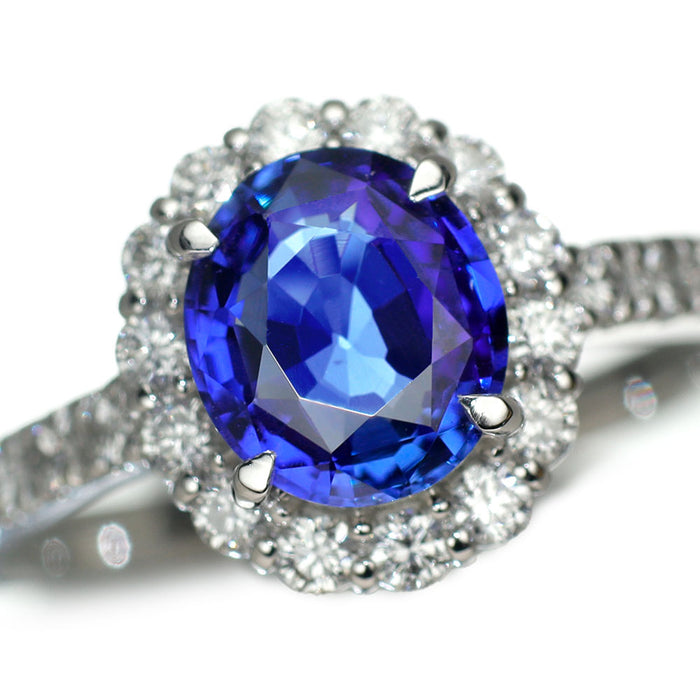
Selby compares blue diamonds with rare brilliance
The value and price of blue diamonds vary greatly depending on their color intensity, carat weight, and whether they are natural or treated stones. You can search for the blue diamond that suits you while checking the product details.
Compare by color
Compare by carat
Check details
Table of contents of this article
- Do blue diamonds have value? It varies greatly depending on whether it is natural or processed.
- Types of blue diamonds | Differences between natural, treated, and ice blue
- Why natural blue diamonds are so valuable | World-class rarity
- blue diamond price market
- What determines the value of blue diamonds?
- Is Treat’s Blue Diamond worth anything? Cases you should buy and cases you should avoid
- Which is more expensive, pink diamond or colorless diamond? Compare the difference in value
- Checkpoints to check before purchasing
- Finally
Do blue diamonds have value? It varies greatly depending on whether it is natural or processed.
In conclusion, the value of blue diamonds is“Natural color” or “treatment”?It can be broadly divided into Even for the same "blue diamond", it is not uncommon for the market value to be hundreds to thousands of times different.
Natural blue diamond value
Natural blue diamonds are produced during the production process.Boron (B)It is an extremely rare substance that exhibits a blue color when absorbed in minute amounts. The main production area in the world is South Africa.Cullinan MineIt is only produced in a small number of areas, and the amount produced is small even in a year. world diamond productionLess than 0.02%It is said to be the highest quality colored diamond and is sold at auctions at Sotheby's and Christie's for tens of millions of yen to hundreds of millions of yen per carat.
It has a stable asset value and is a gemstone suitable for long-term holding and inheritance.
Treated blue diamond value
On the other hand, most of the "blue diamonds that can be bought for tens of thousands of yen to hundreds of thousands of yen" on the market are colorless to light-colored diamonds.Radiation irradiation + annealing (heating)This is a ``Treatment Stone'' that has been artificially treated to give it a blue color.
Although you can enjoy the beauty of treated blue,Asset value is almost equal to or lower than colorless diamond. The purchase price is also generally evaluated based on the colorless diamond standard.
POINT:In the "Origin of Color" section of the certificate of authenticity (GIA etc.) “Natural” If it is described as natural,“Treated” or “Irradiated” If it is written as , it is a treated stone.
Types of blue diamonds | Differences between natural, treated, and ice blue
Even if we talk about blue diamonds all at once, it is actually necessary to understand them separately into the following three types.
| type | Cause of color development | rarity | Price range (1ct guideline) |
|---|---|---|---|
| natural blue (Fancy Blue) |
Contains boron | ★★★★★ | 10 million to several hundred million yen |
| ice blue (Type IIa series) |
Very light blue color derived from hydrogen | ★★★★☆ | 300,000 to 2 million yen |
| treatment (processing blue) |
Radiation irradiation + heat treatment | ★☆☆☆☆ | 20,000 to 200,000 yen |
ice blueis a type IIa/IIb type diamond with a pale bluish tinge, and in recent years it has become increasingly popular as a center stone in engagement rings and as a loose stone. Although it is not as expensive as natural blue, it is popular among people who want a little more individuality than colorless diamonds and who want to avoid treated stones.
If you would like to know more about Type IIb blue diamonds, please also read this article.
Why are natural blue diamonds so valuable? World-class rarity
Natural blue diamond is the whole diamond.Less than 1 in 10,000It is also said to be a rare color. It is ranked as the pinnacle of fancy colors along with pink and red.
The reason why there is almost no distribution on the market
- Production areas are extremely limited: South Africa's Cullinan mine accounts for most of the world's supply, but output has been on the decline in recent years.
- Special generation conditions:Boron needs to be incorporated into crystals deep within the earth's mantle (150 km or less), and the probability of its occurrence in nature is extremely low.
- The appearance of large grains and dark colors is even rarer.:When it comes to Fancy Vivid Blue class with over 1ct, it is at the level of dozens of stones in the world.
- Strong demand from wealthy people and collectors: There is always strong buying demand in the auction market, and even if it goes on the market it is quickly absorbed.
World famous natural blue diamond
- hope diamond(45.52ct/owned by Smithsonian Institution)
- oppenheimer blue(14.62ct/sold for approximately 6.3 billion yen in 2016)
- blue moon of josephine(12.03ct/approx. 5.7 billion yen)
blue diamond price market
Price guide for natural blue diamonds
The price of natural blue increases exponentially depending on the intensity of the color (Fancy Light → Fancy → Fancy Intense → Fancy Vivid → Fancy Deep).
| carat | Fancy Light Blue | Fancy Blue | Fancy Vivid Blue |
|---|---|---|---|
| 0.3ct | 300,000 to 800,000 yen | 1 million to 3 million yen | 4 million to 8 million yen |
| 0.5ct | 800,000 to 2,000,000 yen | 3 million to 7 million yen | 10-20 million yen |
| 1.0ct | 3 million to 6 million yen | 10 million to 30 million yen | 50 million to over 100 million yen |
*Market prices are reference values as of 2026. Varies depending on clarity, cut, certificate of origin, etc.
Treatment blue diamond price guide
| carat | Processing blue (retail price guide) |
|---|---|
| 0.3ct | 20,000 to 80,000 yen |
| 0.5ct | 50,000 to 150,000 yen |
| 1.0ct | 100,000 to 300,000 yen |
Selby compares blue diamonds with rare brilliance
The value and price of blue diamonds vary greatly depending on their color intensity, carat weight, and whether they are natural or treated stones. You can search for the blue diamond that suits you while checking the product details.
Compare by color
Compare by carat
Check details
What determines the value of blue diamonds?
Effect of color (color depth/vividness)
The grading of fancy color diamonds is based on a different axis from the 4Cs of colorless diamonds."Color grade"is given the most importance. GIA evaluates the strength of color using the following 9 levels, which greatly influences the price.
Importance of appraisal report/processing notation
When purchasing blue diamonds,Presence of a certificate of authenticity (grading report) and issuing agencyis a point that you should definitely check.
- GIA (Gemological Institute of America):World standard. Clearly state whether it is natural or treated.
- CGL (Central Gem Laboratory):Highly reliable in Japan.
- AGT: Strength in domestic color diamond evaluation.
Attention:Blue diamonds that only have a ``certificate of identification'' and no ``certificate (grading)'' tend to be highly likely to be treated stones.
Is Treat’s Blue Diamond worth anything? Cases you should buy and cases you should avoid
This does not mean that "processing blue = don't buy it."If the purpose and expected value match, Treatment Blue would also be a reasonable option.
◎ Case worth buying
- For fashion rings and melee purposesI just want to enjoy the beauty of color
- engagement ringBack stone (surprise stone)put it small as
- I want blue accents within a budget of 100,000 yen
- that it is a processPurchase with clear understanding and understandingare doing
× Cases to avoid
- Expecting asset value/resale
- Despite being described as “natural,” the price is extremely low.
- There is no certificate of authenticity and processing information is unknown.
- Large grains (over 1ct) are recommended at a higher price than the market price.
The "something blue" blue diamond that is featured on the back stone of wedding rings is oftentreated stone (or synthetic)It is. This is a specification that balances cost and design, and is a common choice for brands. There's no need to worry too much.
Which is more expensive, pink diamond or colorless diamond? Compare the difference in value
| color | rarity |
1ct price guide (highest grade) |
market trends |
|---|---|---|---|
| red | ★★★★★★ | 200 million~ | Dozens of stones in the world |
| blue | ★★★★★ | 50 million to over 100 million | Strong implications |
| pink | ★★★★★ | 30 million to 80 million | Soaring after Argyle closure |
| yellow | ★★★☆☆ | 2 million to 5 million | stable |
| Colorless (D-IF) | ★★★☆☆ | 2 million to 4 million | stable |
When comparing 1ct/highest grade, approximatelyRed > Blue > Pink > Yellow > ColorlessThe order will be: However, since the closure of the Argyle mine in 2020, the price of pink has continued to rise at an annual rate of 10 to 20%, and it has been pointed out that there will be a reversal with blue in the future.
Checkpoints to check before purchasing | How to determine the certificate of authenticity, processing description, and retailer
Pre-purchase checklist
- Is the certificate GIA/CGL?(Please be careful only with simple identification documents)
- Is there a description of “Origin of Color: Natural”?
- If it is a treated stone, is it clearly stated?(Irradiated / Treated)
- Is the color grade (Fancy ~ Vivid, etc.) listed?
- Is there a return/cancellation policy?(Especially mail order)
- Does the serial number (girdle laser engraving) match the certificate of authenticity?
Points to know when choosing a reliable store
- Antique dealer license numberis clearly indicated
- You can check the actual item loosely, orhave a physical store
- Treated stone/natural stone are clearly separated and sold.
- Colored diamonds and rare loose diamondsExtensive handling experience
- with certificate of authenticityWill respond to re-examination
Okachimachi is home to a concentration of jewelry wholesalers and specialty stores, and is one of the best areas in Japan for selecting loose jewelry. Since you can compare the actual stones before purchasing, we recommend seeing them in person for stones with delicate colors like blue diamonds and ice blue.
Finally
blue diamond is``Natural or treated?'' ``Darkness of color'' ``Presence of certificate of authenticity.''It is a very profound gem whose value is determined by three axes. From fashion rings costing tens of thousands of yen to asset class loose rings worth over tens of millions of yen, there is a wide range within the same "blue" color.
We, Selby, are the only members of the Komehyo Group.Jewelry specialty companyWe have been engaged in the import and export of colorless and colored diamonds for many years. We have a rich track record of handling not only loose items but also branded jewelry and rare stones, eliminating intermediate distribution.Providing the lowest price in the industryis possible.
Opened in 2026Selby Okachimachi Ekimae storeNow let's expand the loose corner significantly. We have created an environment where you can actually hold and view rare loose diamonds, from type 2a and type 2b ice blue diamonds to fancy colored diamonds."A valuable stone"Please come and meet us with us.
Selby compares blue diamonds with rare brilliance
The value and price of blue diamonds vary greatly depending on their color intensity, carat weight, and whether they are natural or treated stones. You can search for the blue diamond that suits you while checking the product details.
Compare by color
Compare by carat
Check details